


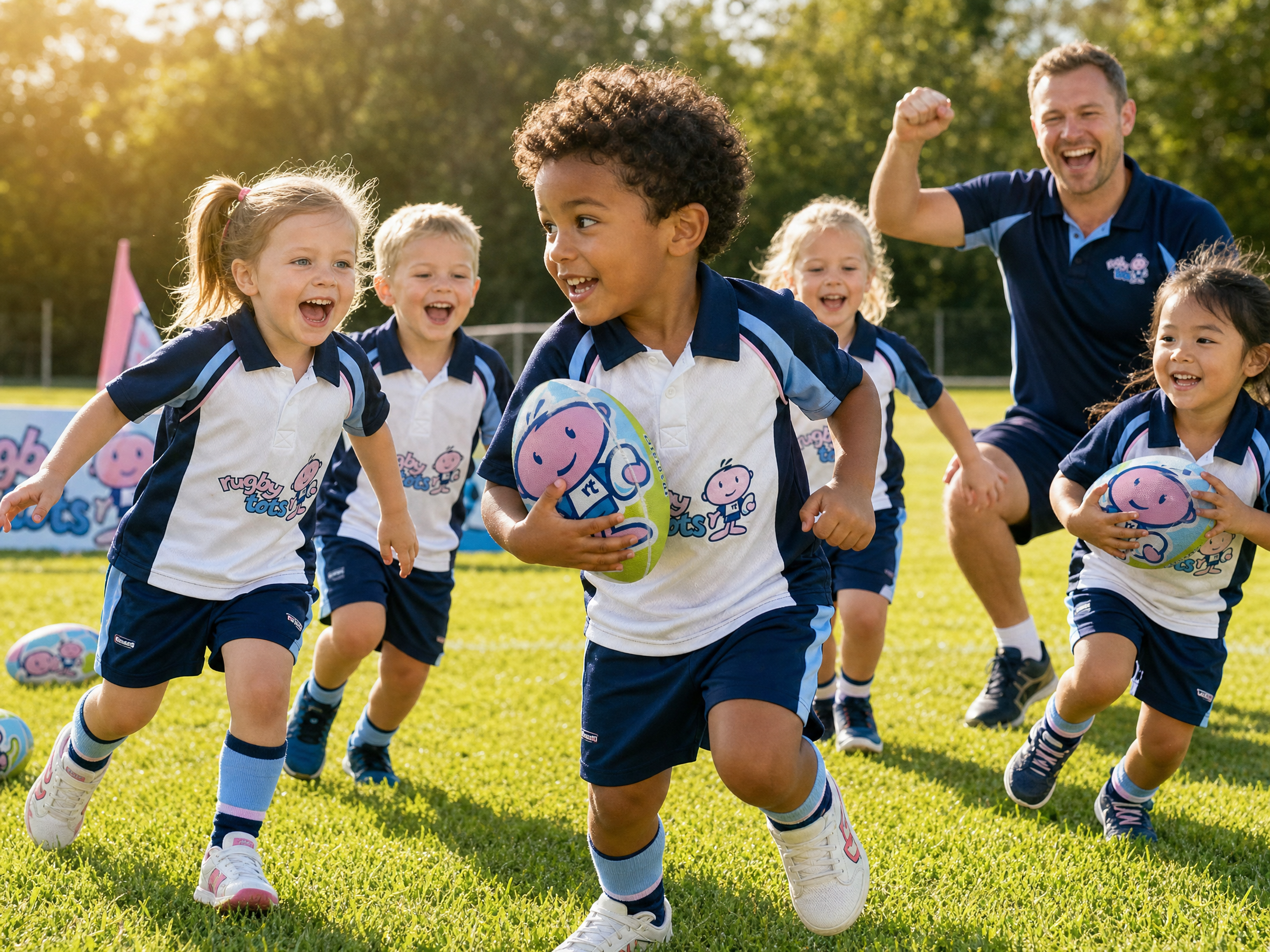
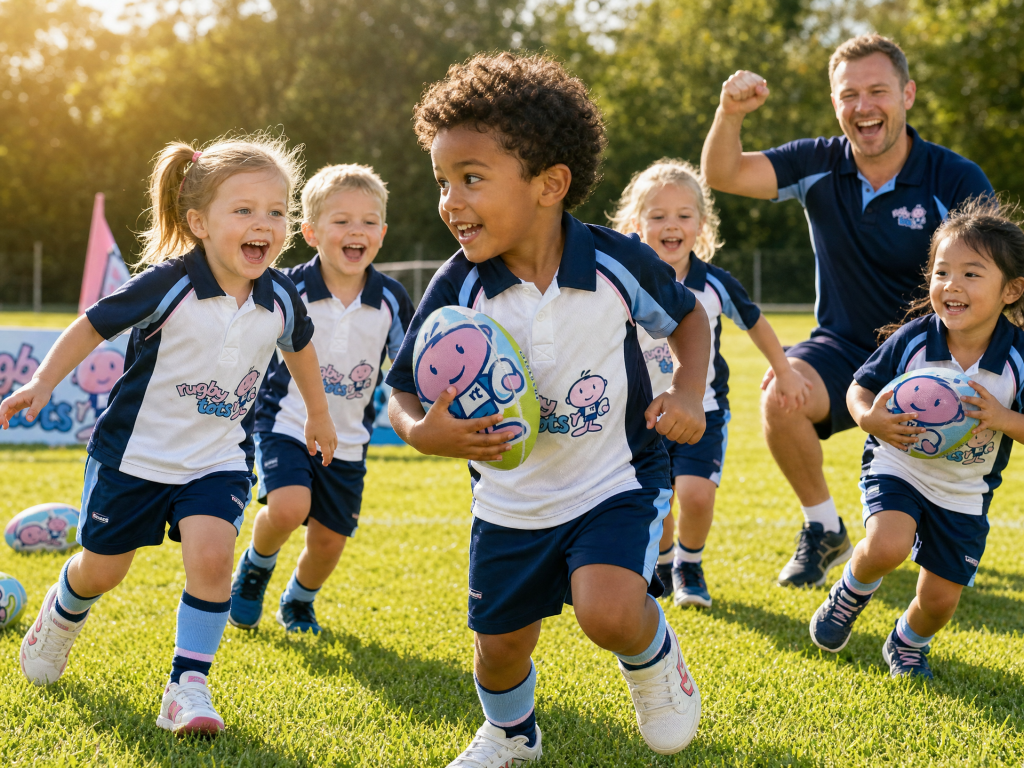
Long before a child understands the rules of rugby, they are learning something far more lasting: how to win with grace, lose with dignity, and treat teammates and opponents with respect. At Rugbytots, sportsmanship is not a lesson we teach once and move on from. It is woven into every session, every drill, and every interaction on the sideline, from the very first class a child attends.
Why Sportsmanship Starts So Early
Children aged two to seven are still developing the emotional tools they need to manage disappointment, share attention, and celebrate someone else’s success. This is precisely why the principles of fair play are introduced from a child’s very first Rugbytots class, long before the concept of “winning” fully makes sense to them. Our coaches model respectful language, calm responses to mistakes, and genuine encouragement in every session, because young children copy what they see far more readily than what they are told.
Built Into Every Session
Rather than emphasising winning, our coaches consistently reward effort, encouragement, and fair play. This shows up in three specific ways in every class:
- Every child is praised for effort and improvement, not just for winning or scoring
- Games are structured around turn-taking and teamwork rather than head-to-head rivalry
- Coaches gently redirect frustration into encouragement, teaching children to say “well played” and mean it
The Role of Parents on the Sidelines
Sportsmanship is not only taught on the pitch. We ask every Rugbytots family to be part of this culture too, because young children are watching the adults around them just as closely as they watch their coaches. The way we behave on the sideline sends a powerful, unspoken message about what really matters: the scoreline, or the way the game is played. A calm, encouraging sideline reinforces everything we work to build during the session itself, and it teaches children that support does not depend on the result.
A Foundation for Life, Not Just Rugby
The habits formed during these early years, resilience after a loss, humility in victory, and respect for teammates and opposition alike, rarely stay on the pitch. They shape how a child handles disappointment at school, cooperates in group activities, and treats other people throughout their life. This is the deeper purpose behind every Rugbytots session: using rugby as the vehicle, and character as the destination.
Sportsmanship is not an accident, and it does not happen on its own. It is coached, modelled, and practised, starting from age two. That is the Rugbytots way.
This entry was posted on 7th August 2026.